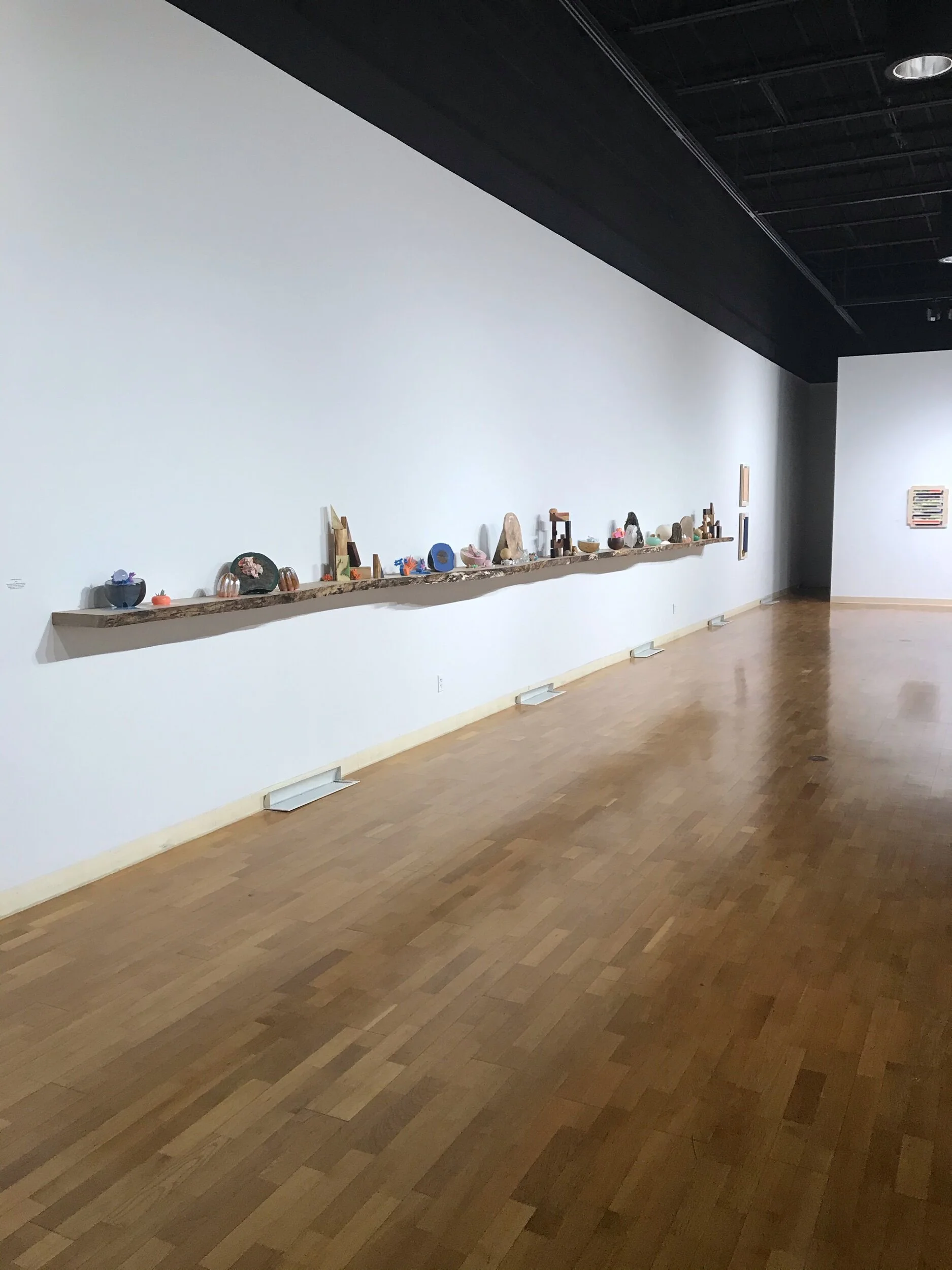
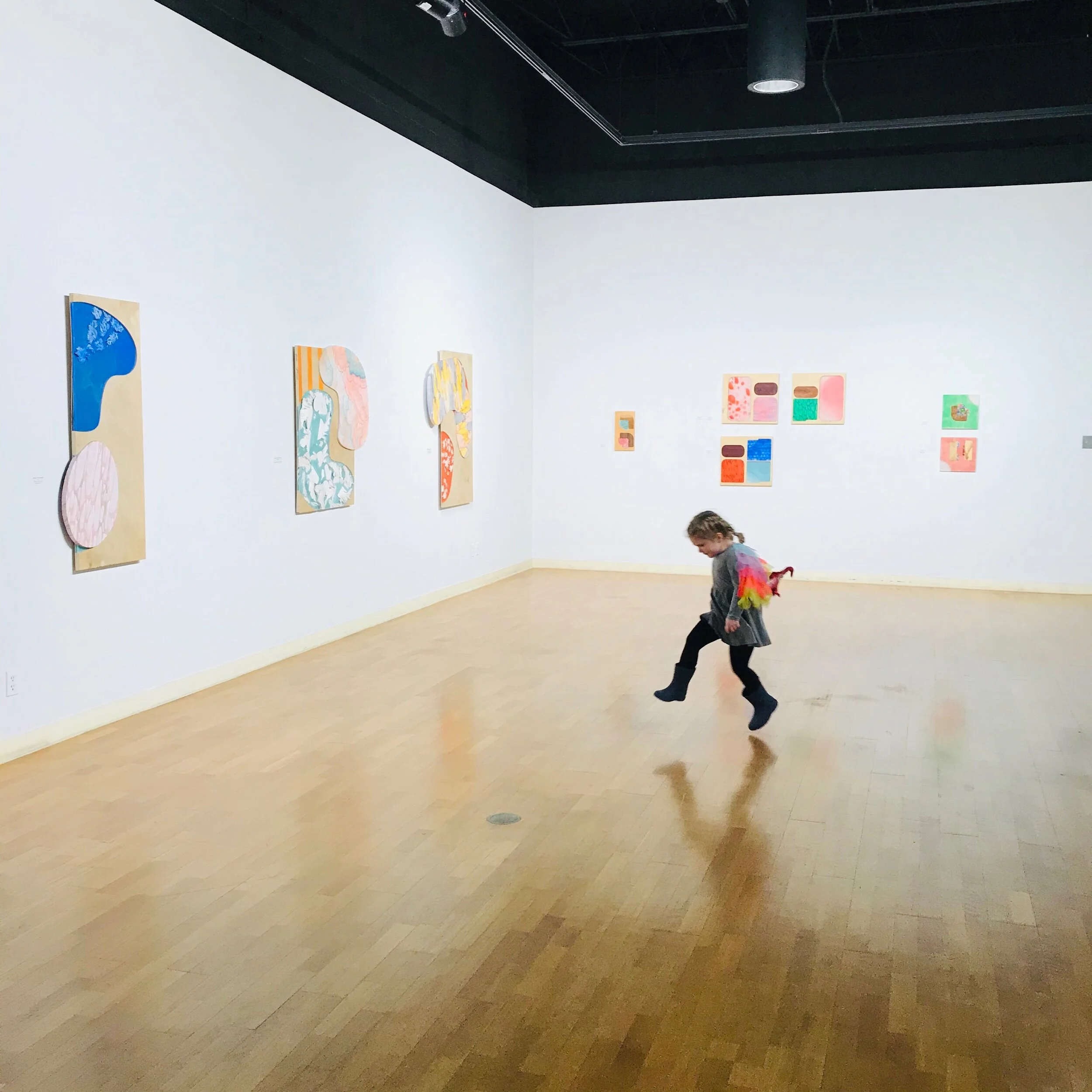
Weston Art Gallery, Cincinnati, OH
Jan 19 - Mar 3, 2024
Byproduct Studios show statement:
Our collaborative artwork focuses on the use of excess materials from our daily lives, artistic practices, and surrounding natural and built environments to create “semi functional” artwork that recalls domestic objects like tableware, and furniture, or references to the architectural spaces that we inhabit. We enjoy contrasting these rigid surfaces and often traditional forms with bodily-like materials that are, or appear to be, soft and malleable; materials that seem to or at one point did slump, stretch, flow, drip and squish. These qualities are shared with the human body and lend an organic or biological character to the work. The resulting creations are chaotic, joyful, and curious.
We relocated to Cincinnati in the summer of 2022, and the process of moving forced us to consider the power of our objects, which seemed as though they had ownership over us. As we considered what to keep and what to throw away, we experienced feelings of responsibility, affection, dislike, and guilt, both in regard to the objects themselves and our roles as their caretakers. These emotions manifest in the work as a critical examination of the economic and sentimental value of heirlooms, children’s possessions, and disused-but-functional furniture. Some of the work also functions as a cenotaph for objects we ultimately parted ways with.
The time spent transforming our first home and now our new home is also reflected in the work. Physical features of the home are incorporated into installations and artworks by utilizing original materials and measurements or evoking architectural features to generate an uncanny sense of domesticity and familiarity. Smaller sculptures and assemblages placed upon larger surfaces are a playful interpretation of activity that would happen in the domestic space which call attention to the value of daily rituals.
photographs by Sven Kahns https://www.svenkahns.com/
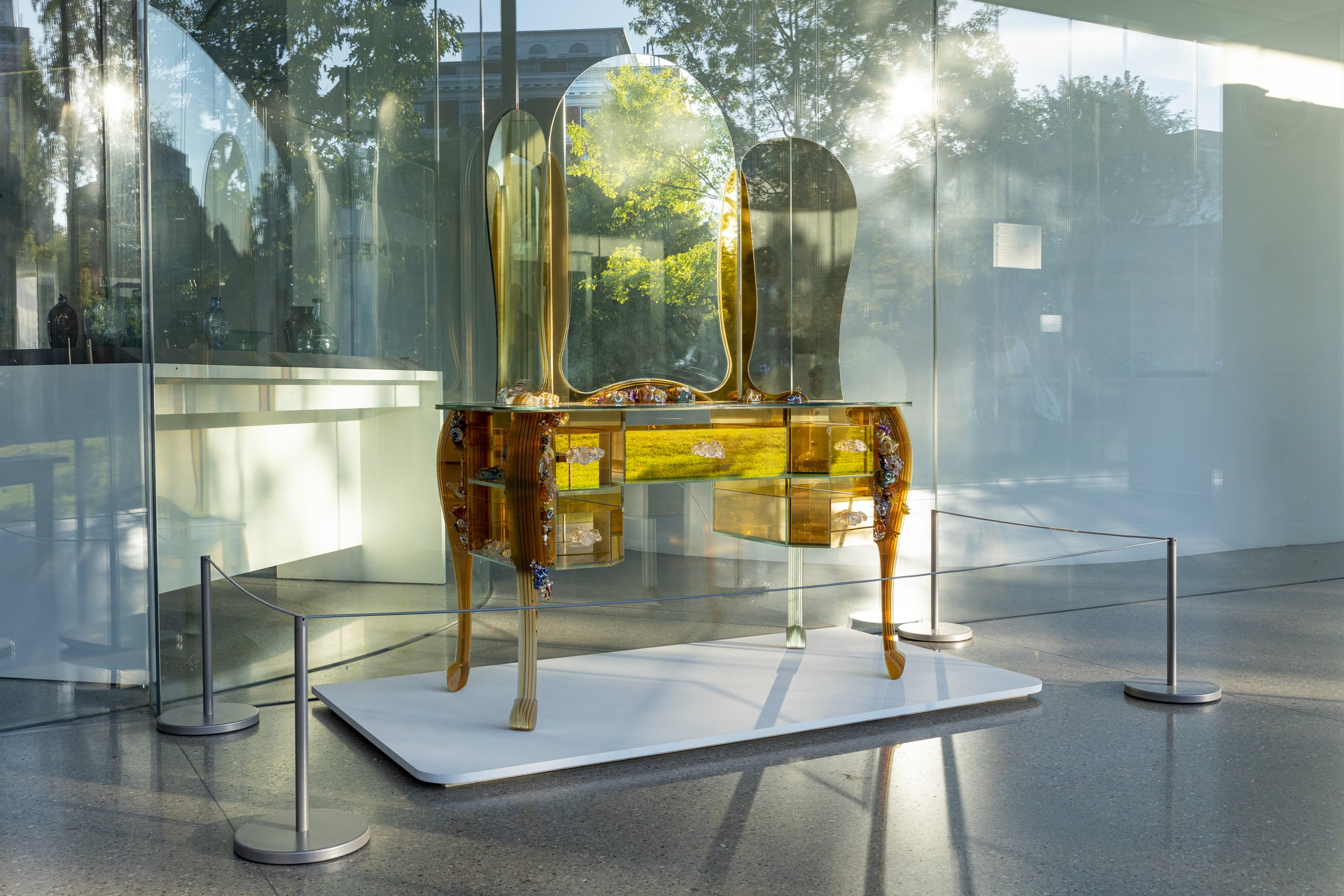
The vanity is an opulent piece of furniture that provides the user with the opportunity to prepare themselves for the day, reflecting on their appearance, or to use the surface as a desk for working, writing, reading, computing, or where someone might store or display important belongings, items that are cherished and special, or the objects that they use every day.
The Louis XV style we have chosen to replicate is meant to be familiar but also ostentatious, a bygone style of furniture that has been around for centuries, inhabiting many homes, encountered in second-hand stores and antique shops, but also in its finest forms found in museums and palaces. Unlike the clean functional lines of modernism, this style emphasizes a complex, almost tessellated formal language which we feel is more symbolically relevant to our busy, chaotic lives.
By utilizing laminated glass layers the viewer can see through some of the surfaces and encounter elements of transparency and reflection on others, furthering the visual complexity. The vanity and mirror are embellished with blown and hot sculpted glass, flat glass components that have been manipulated in the hotshop, flame studio, and in the kiln, as well as various sculpted pieces and parts from our studio to create a maximalist aesthetic contrasting the smooth clean lines of the laminated sheet glass for the rest of the constructed sculpture.
Our hope with this piece is to celebrate the optical and material qualities of glass, marrying beauty and light with weight and tactility. The vanity is also uncanny, creating a slight unease, as we are recreating furniture and objects that are both familiar and strange to the viewer. Similar to the virtual world, the vanity is transparent yet opaque at times, and presents a distorted or oblong view of our possessions, desires and lives.
Cincinnati Nature Center - Rowe Woods
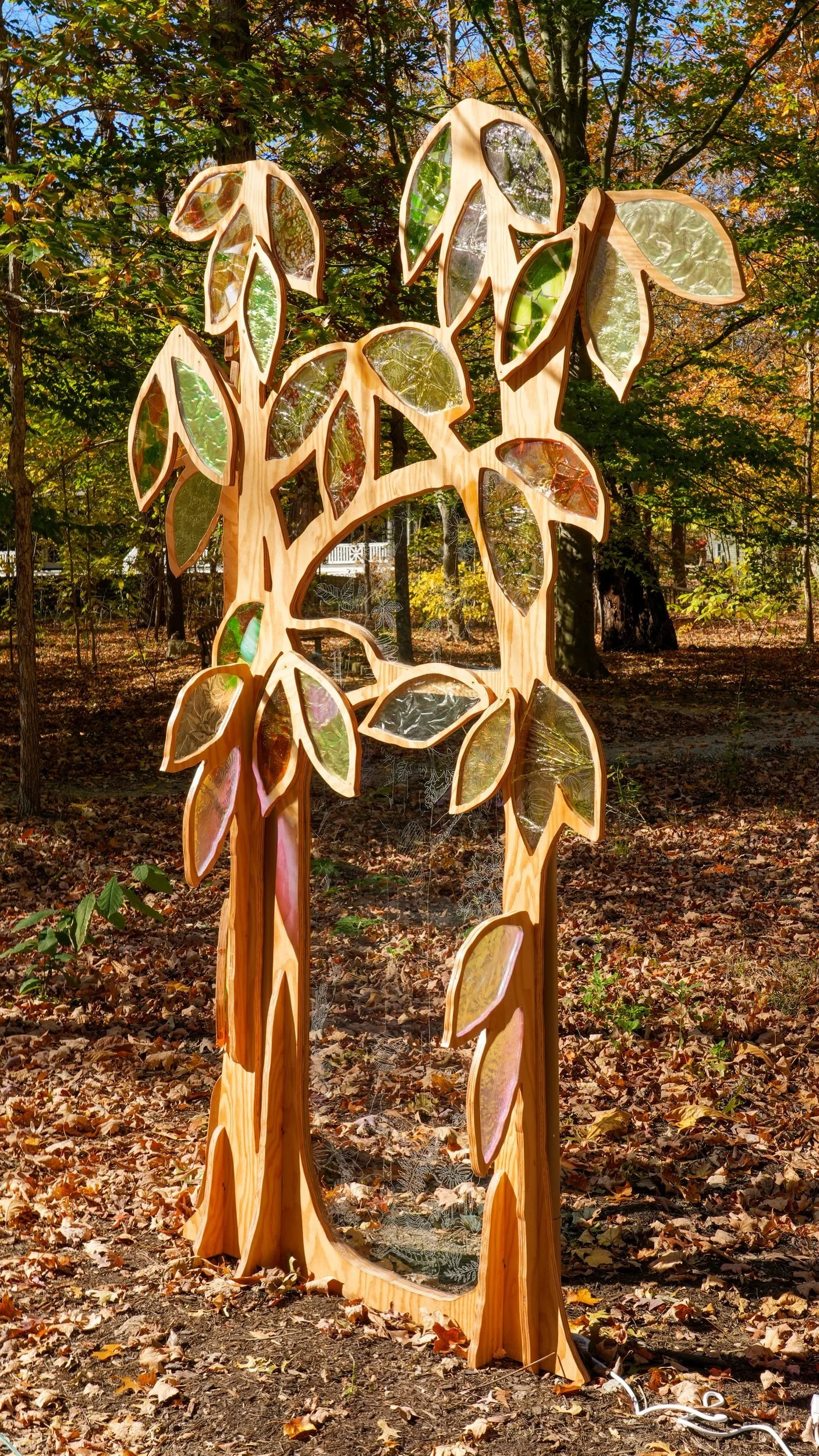
Forest Portals, 2024-2025
For the Cincinnati Nature Center portal’s project funded in part through the National Endowment for the Arts, and Artswave, Burke and Gorgen wanted to invite viewers to find whimsy and fantastical moments with the sculptures, but also have opportunities to learn about the flora, fauna, and terrain of Ohio. Each sculpture has hidden seek and find elements, or reveals something about Ohio, or the history of Cincinnati Nature Center itself.
Portals have been reworked into 4 themes that relate to the Cincinnati Nature Center
Each portal contains visual elements related to the nature center, either in three-dimensional form or two-dimensional form that will function as a “seek and find” for visitors.
Site 1 - Krippendorf Paw Paw Grove
Theme: Pawpaws and honoring Krippendorf Lodge
Krippendorf Paw Paw Grove draws on influences from the Krippendorf Lodge interior and exterior and the pawpaw grove nearby. A reinterpretation of paw paw trees supports a glass panel etched with the artists drawing of a low relief wall mural located in the lodge. The mural is not always visible to park attendees. Numerous woodland creatures and native plants are located in the imagery. How many can you find?
The leaves of the portal’s pawpaw are made of stained glass and resin so that light can pass through. The structure is made from wood, glass, metal, paint, resin, and Hydrostone.
Site 2 - Fauna
Theme: Old forest, trees, and animals
Fauna is inspired by abandoned stone structures that are happened upon in forests that were once inhabited by residents and then left to be reclaimed by nature. The oval at the top contains sandcast, sculpted, and stained glass elements. The optic display will change with the light of the day. The gray bark and stone like sections of the portal contain numerous forest fauna. How many animals, insects, and flowers can you find? How many are native and are there any that do not belong?
The structure is made from wood, Hydrostone, glass, metal, resin, polystyrene, and vinyl. There are reflective glass beads incorporated into the surface of the gray sections, and will glow if a light is shining on it at dusk or dark.
Site 3 - Field Flora
Theme: Field Flower/Pollinators
Field Flora is inspired by Queen Anne’s Lace, a flower that commonly invades open fields and meadows. The heads of each flower contain insects, flowers, or creatures found at the nature center. Meadows are important to support pollinators and native creatures, and Field Flora honors those connections through the interconnected structures and imagery. The structure is painted with phosphorescent paint and will glow in the moonlight. It is constructed out of wood, metal, Hydrostone, paint, and a reclaimed chandelier.
Site 4 - Tributary
Theme: Water, streams and forest
Tributary is a whimsical take on a tree that has been windswept as it sits near a stream. The broad flat sections of the tree canopy contain a carved map of the Ohio river basin that has been filled with resin and holographic elements to mimic water. The chosen colors of the tree take you through each season. The portal is constructed of wood, paint, metal, and resin.
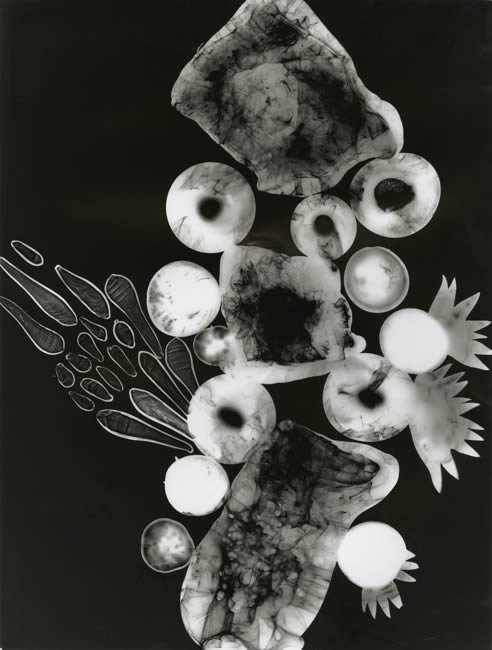
Images featured are Burke’s photograms created in 2016 that are in the Centre Pompidou’s collection from the project Dust.The Plates of the Present . The photographic installation made between 2013 and 2018 at the initiative of Thomas Fougeirol, the French painter, and Jo-ey Tang, the American artist and curator. Together they invited each of one hundred and twenty-four artists – visual artists, musicians, writers and video-makers of a variety of nationalities – to produce a series of eight photograms in an improvised dark room in Ivry-sur-Seine. Dust is a grandiose collective work that pays homage to a rapidly disappearing form of image.
Read more about it here and here.
Molly Jo Burke & Nathan Gorgen
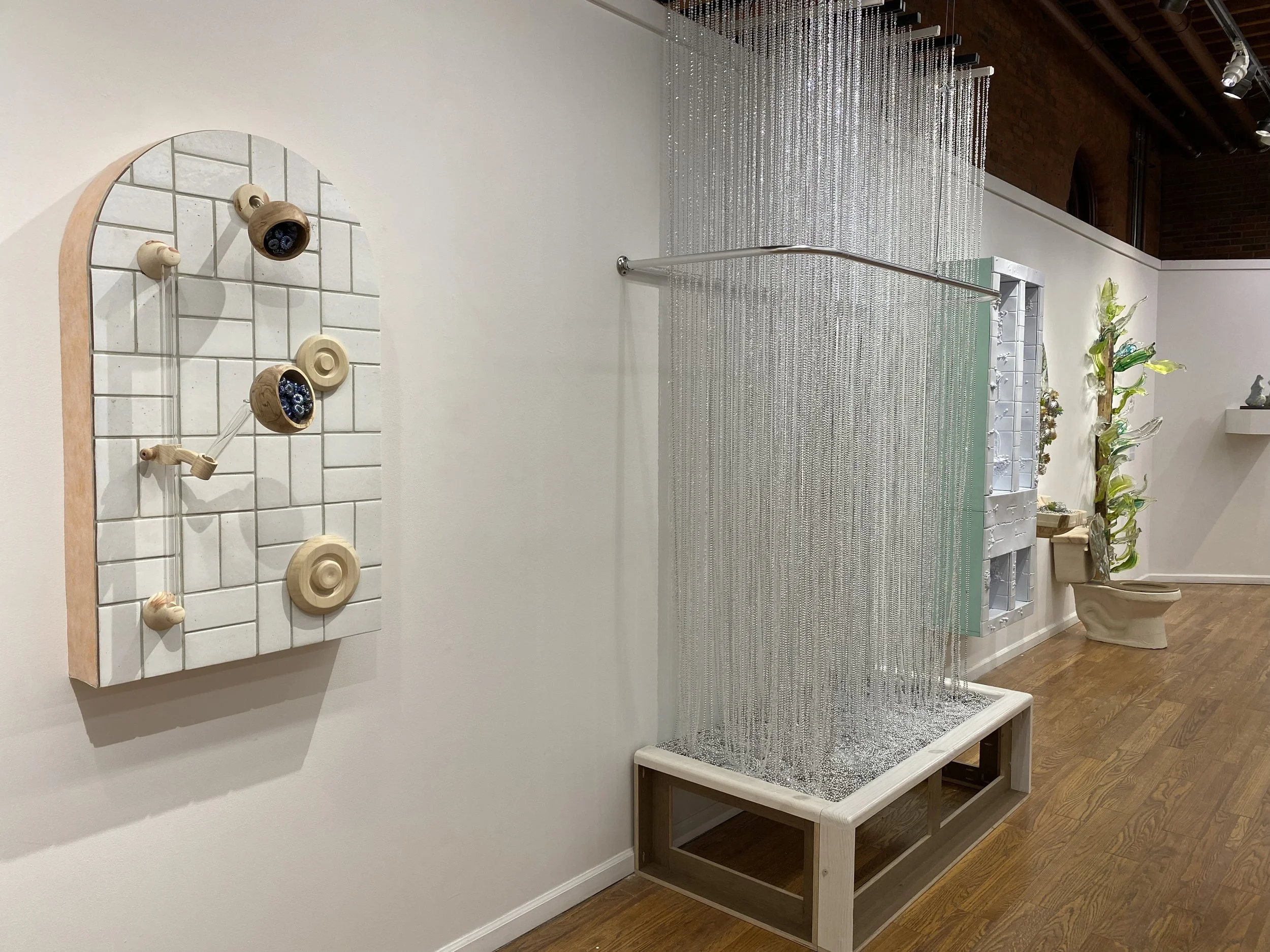
Lavatorium, 2022
Box Elder, poplar, ash, ceramic tile, glass, mirror, beads, polystyrene, plywood, grout, mortar, borosilicate, acrylic paint, glue, Kerdi band, found objects
Statement: The bathroom is a space everyone uses, fulfilling many functions - a receptacle for waste, a way to refresh our bodies, a place to store self care items. The physical space of the room also showcases status depending on aesthetic choices utilized throughout.
We renovated our bathroom after the birth of our second child, out of necessity as the walls were crumbling from water damage. We loved the vintage qualities of the original room which had not been updated since the 50s, terrazzo linoleum with glitter inlay, sky blue tile, chrome faucets, and we salvaged many of the materials, utilizing them in our artmaking. Our practice is one that focuses on intersections - professional roles and domestic roles overlap, influencing one another, creating a visual narrative within our artmaking. After this year of forced togetherness those boundaries seem especially blurry.
For this project we are unfurling the physical space of a room full of our aesthetic choices - but choices that were restrained by strict functionality - and we will reinterpret the fixtures as sculptures and low relief wall pieces. Products that would normally be found in the space will be incorporated throughout as reimagined forms. Continuing our practice of incorporating materials that are accumulated from our lives and environment, the final work will cover 20 linear feet of objects and fixtures reinterpreted as artworks. The installation overall is a reflection on a space that is both intimate yet functional, but what would happen if that space could reflect the convergence of our lives?
*Installation at Columbus Cultural Arts Center, featured as part of Boundary Lines group exhibition, Jan 10 - Feb 12, 2022.
documented by Sven Kahns Photography
Nathan and Molly are an artist and designer couple and parents of young children, who collaborate on artwork that raises issues of environmentalism and waste and the nature of the materials and objects that surround their everyday lives. The artists have very different individual practices, and they use the excess material left behind by their respective processes to create their collaborative work. With this newest series they have begun to use the objects they collect in their family life, such as unused children’s items and leftover components from home improvement projects. This results in imaginative recycling and repurposing of substances for roles that they do not normally fill, which in turn allows the artists to address their own “waste stream.” A variety of coatings, such as plaster, wax, epoxy, and faux painting (also left over from other projects) are then applied to the materials to either heighten or obscure their innate qualities. This allows the artists to play with perceptions of a material’s purpose, quality and value, as waste material and the byproducts of their life are transformed through the process. Incorporating reflections on their lives lived together themes of landscape, play, and architecture flow through the art works.
New series started in 2019 and 2020. Content focus on culture and society that reminisces too much on the glory of the past without realizing the dangers of the present and future. Distracted by our own reflection we remain focused on the surface without ever deeply critically reflecting.
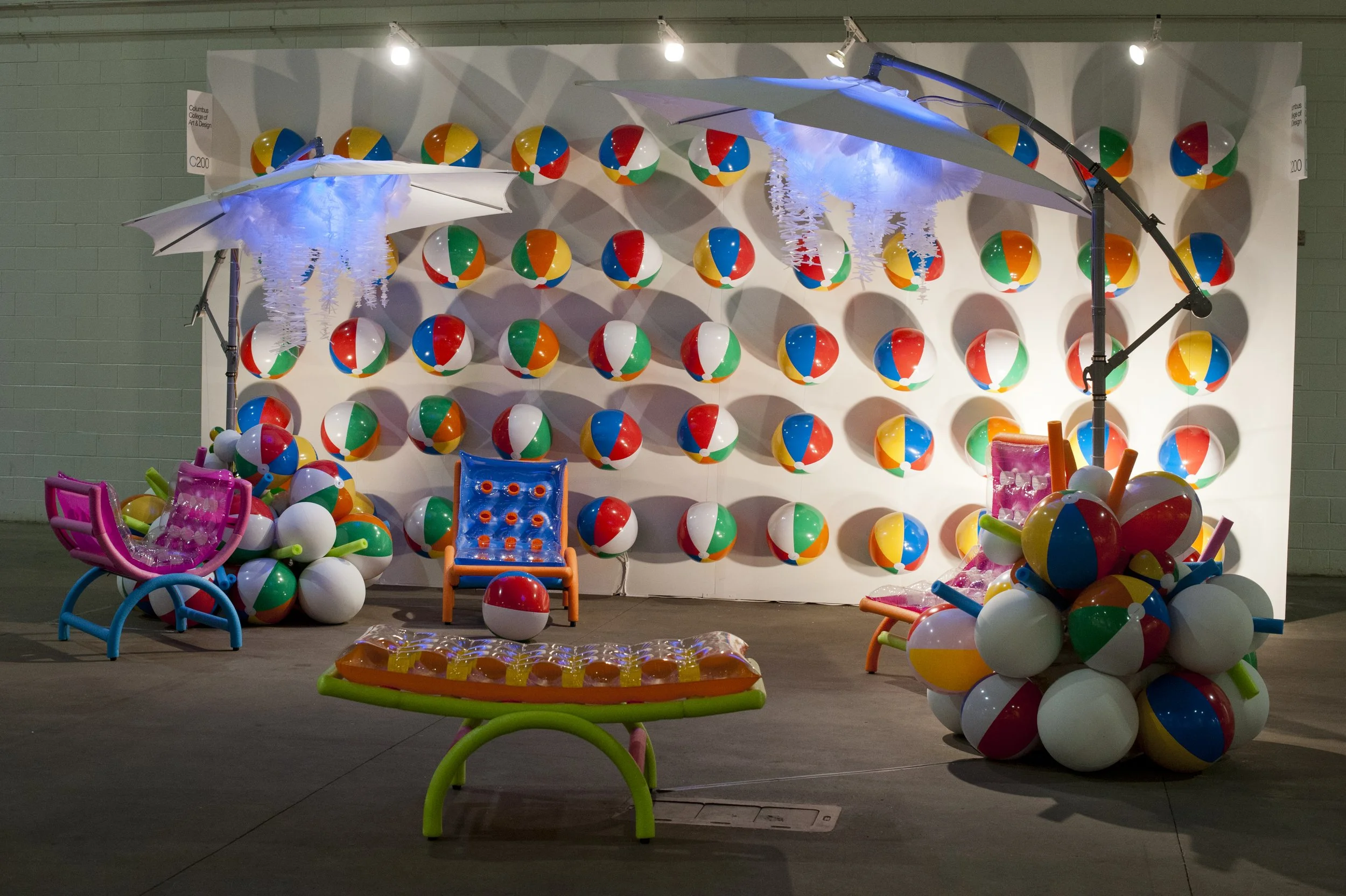
[sofaCONNECT]:2017
Columbus College of Art & Design
MFA in Visual Arts: New Projects
Columbus, OH
FACULTY ADVISORS:
Molly Jo Burke, Assistant Professor, Assistant Director of Graduate Studies
John Cairns, Lecturer
STUDENT TEAM MEMBERS:
Hannah Watters
Zane Miller
Katheryn Fisher (aka) ¡Katie B Funk!
Young-Mi Lee
Yae Reem Lee
Yajim Amadu
THEME: “What happens when the beaches are gone?”
We created a futuristic beach environment, centering around an apocalyptic, pseudo-nostalgia were there to be no beaches left in the future. With global warming and imminent climate change on the horizon - “beaches” as we know them to be will shift and transform. We created a seating area to be inviting, engaging, and energizing overall, with an emphasis that participants might put into consideration how radically different this type of environment will become. Additional elements used throughout the installation to influence memory and incite the sensation of both summer and the outdoors, all while housed within an interior space.
Our seating is interactive, using pressure-sensitive conductive sheets attached to arduinos, inviting interactive play. We used a combination of seating components - playing on the “futuristic/nostalgic” theme, stalagmite and stalactite structures will be constructed in combination with fabricated chaise lounge chairs for the seating.
Chairs are fabricated using steel tubing covered in pool noodles and inflated rafts. we also created a dome like structure utilizing umbrellas and beach themed items, as well as projection and sound that further emphasize the idea of the beach. By creating a sensory seating environment that utilizes both light and sound, our exhibit blurs the line between high and low art, allowing SOFA guests to reflect and ponder a new environment while considering their own impact on the environment.
Hydrocal and paint, 2014
OSU Urban Arts Space
Collaboration with Nathan Gorgen. Through OSU Urban Arts Space Summer Series. Hopkins Hall Gallery, July 2017.
2D and 3D objects, made of waste, that is ever-expanding, and a commentary on throw-away culture and over-consumption.
Gorgen works with 4x8 foot sheets of plywood that are cut into intricate forms and then assembled into functional objects. The remainder of each sheet, still intact but with ghostly cut-outs of individual parts, resembles a skeleton, only vaguely relatable to the finished product. These skeletons are normally discarded, but we have utilized them as the basis for each work.
Burke creates both functional and sculptural works using glass, plaster and ceramics as her main materials. With the creation of each work there are small amounts of excess, which are often discarded. Also, due to the nature of the materials and process of Molly’s work there are times that pieces fail and at that point the remnants are thrown out. For this exhibition we utilized these fragments to accentuate aspects of the plywood skeletons. The result are works that function as low relief paintings and semi-functional sculptures that comment on landscape.
Photo Credit: Erek Nass
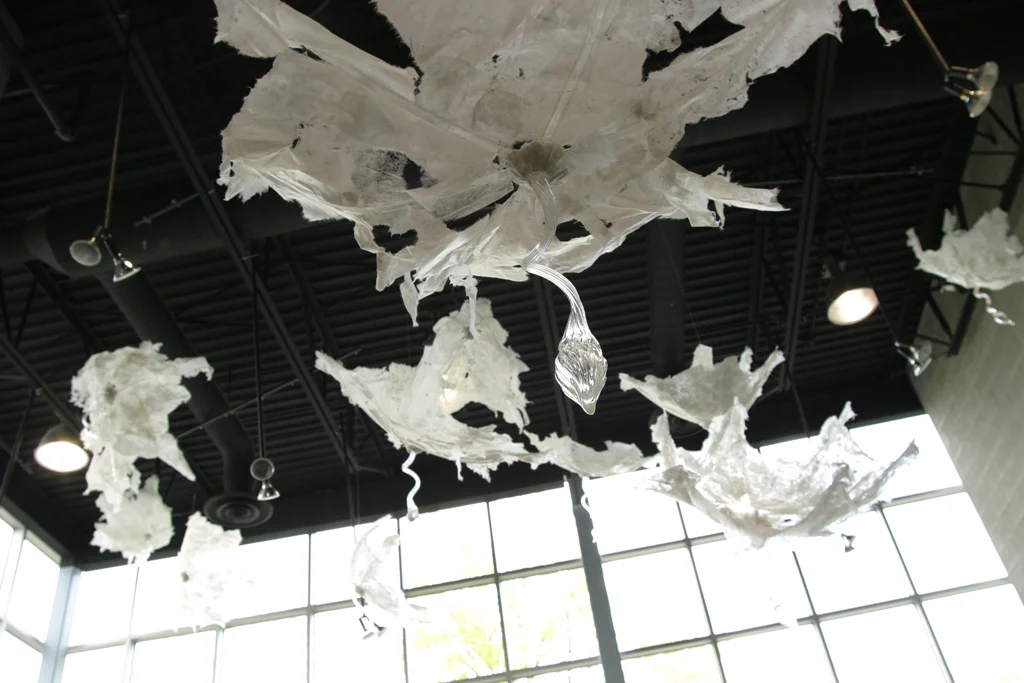
blown glass, hand made paper, Plexiglas, hardware
dimensions variable
2006
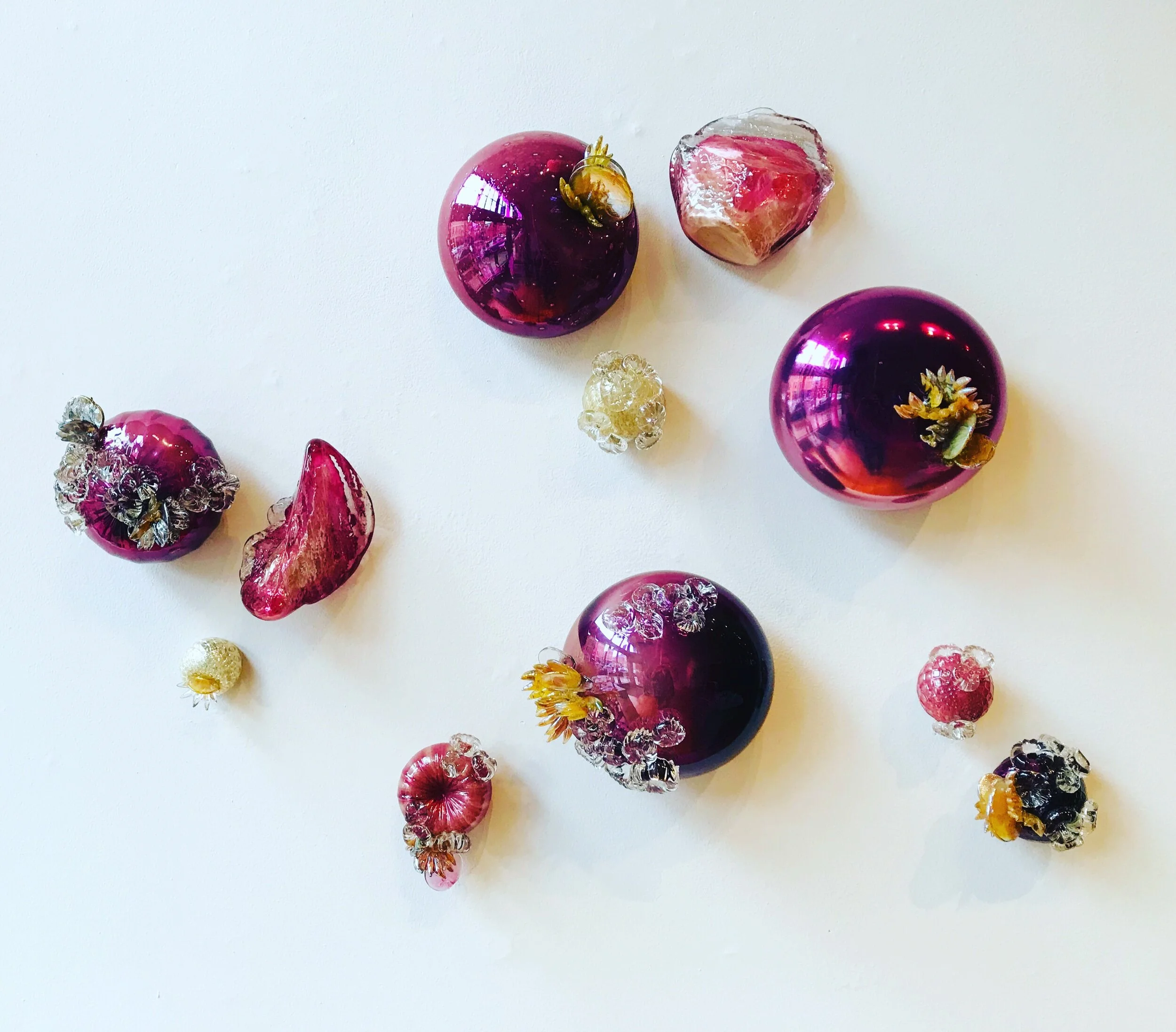
blown glass, fenton red, 2014
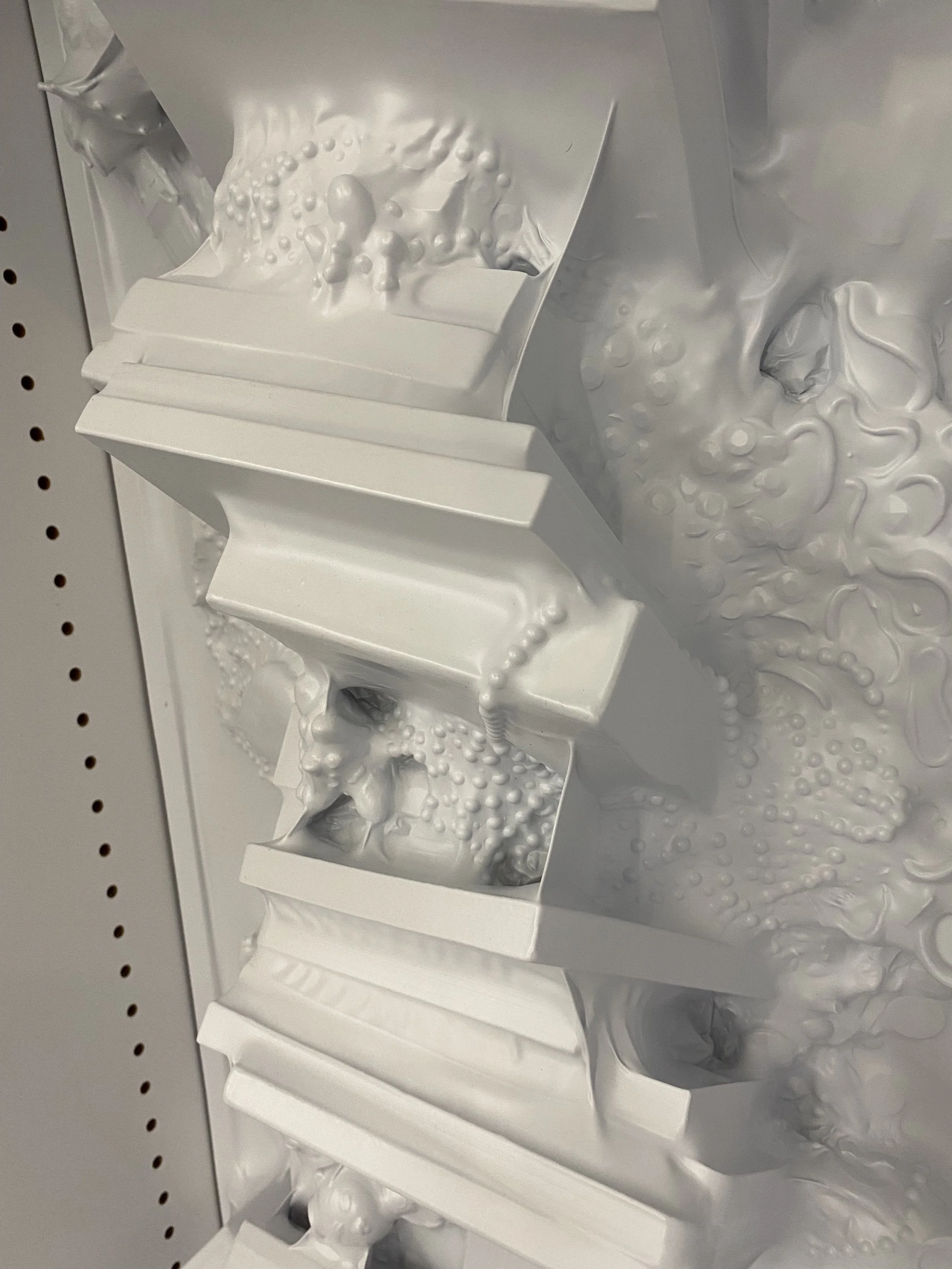
Shelving Unit, 2021
Vacuum Formed Polystyrene
48”x18.75”x12”
Nathan and Molly are an artist and designer couple who create semi-functional artwork centered on the complexity of modern life as they are forced to grapple with the blending boundaries of work, art, and parenting.
They use discarded art, found objects, and sustainably sourced natural materials, as well as objects they collect in their family life, such as unused or broken children’s items and leftover components from home improvement projects and industrial remnants. This results in imaginative repurposing of substances for roles that they do not normally fill, allowing the artists to create surprising, occasionally whimsical artwork, while also addressing their own “waste stream” reflecting on consumer culture in general, and playing with the perception of a material’s purpose, quality, and value.
For this series they have included items from their home libraries and book shelves, a place in the home that is functional but also curated. The vacuum formed pieces create dimensional portraits of the home.
*installed at OSU Fine Art Library, Oct 2021-January 2022
silicone, 2014
Toledo Museum of Art
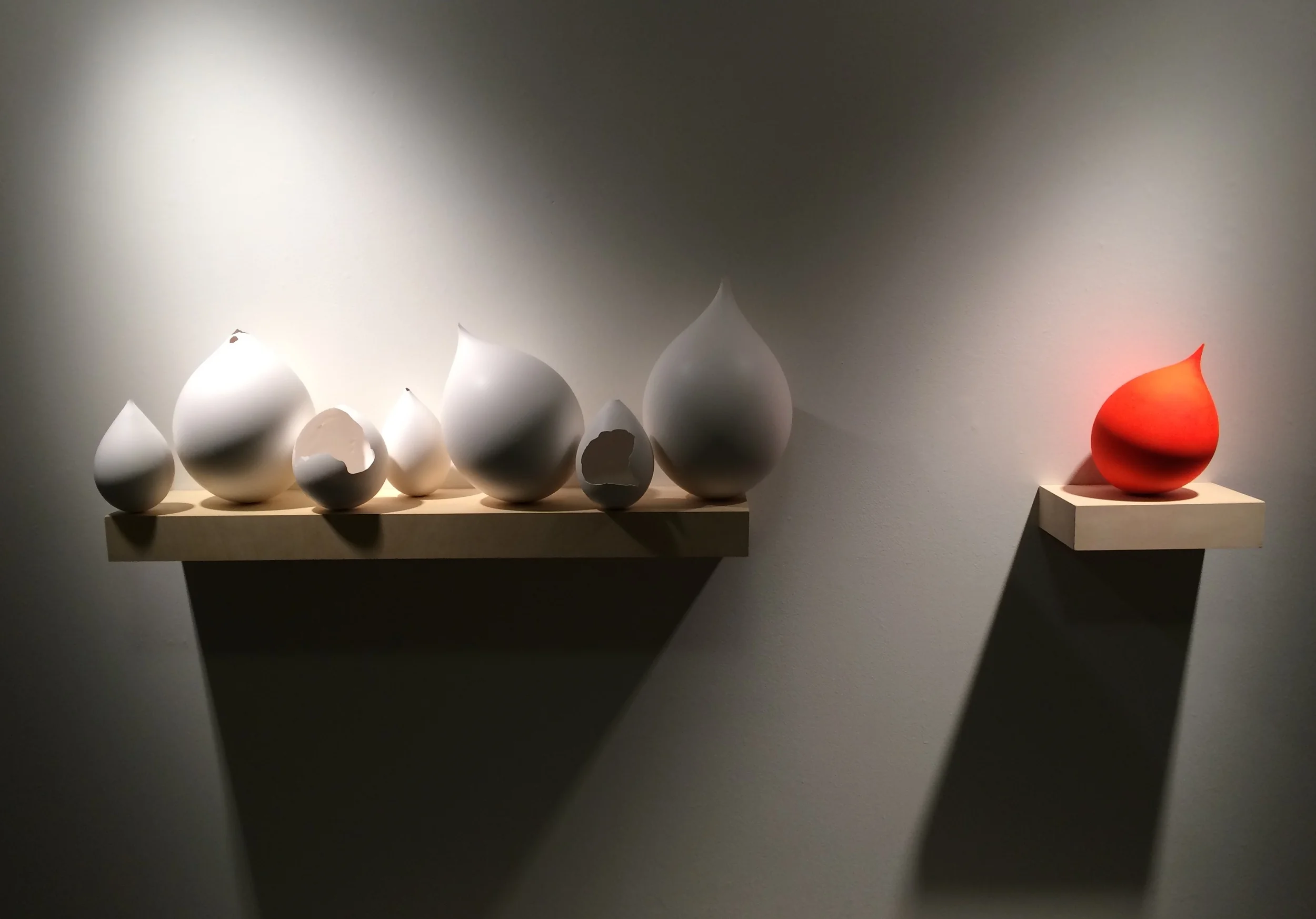
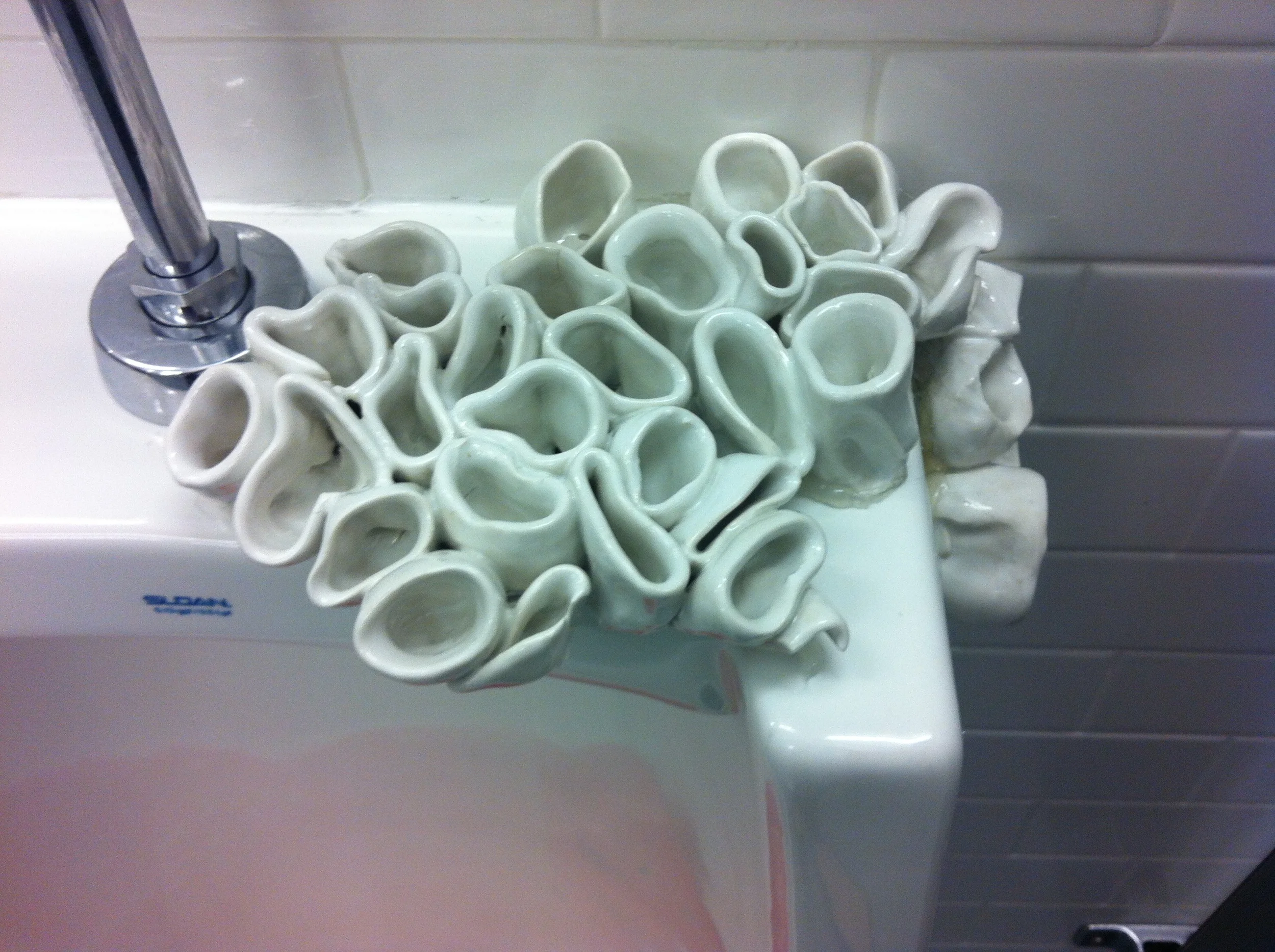
porcelain on porcelain, 2013
molly jo burke, copyright (c) 2006 - 2013
undergraduate bfa work
borosilicate, found clamp; 2014








![untitled [insect]](https://images.squarespace-cdn.com/content/v1/50fdd4b1e4b0dc8c8e316972/1358827968970-E7DEO6CPPAILKU52P1KY/004+MJB.JPG)